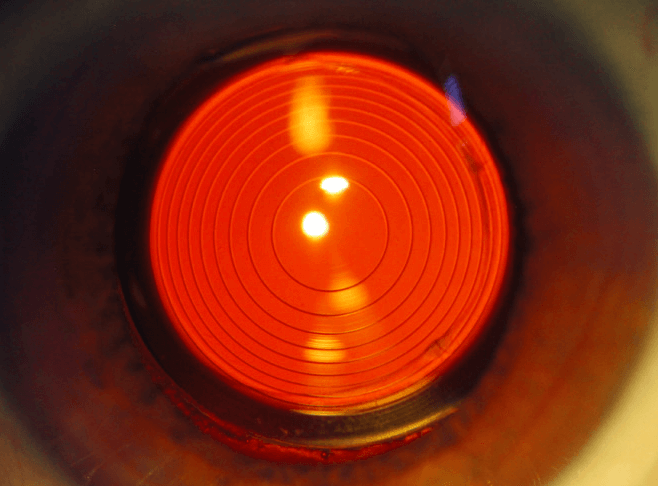
In some cases, the desire to be less dependent on glasses is strong. Under certain conditions, the use of a multifocal intraocular lens with multiple focal points may be considered. This can enable sharp distance and near vision without glasses. However, these lenses also have disadvantages, such as reduced contrast sensitivity, increased glare sensitivity and halos around light sources at night. The advantages and disadvantages are explained in detail during a comprehensive consultation.
A newer category of intraocular lenses with increased depth of focus — so-called EDOF lenses (Enhanced Depth of Field) — represents an interesting alternative to conventional multifocal lenses. With these lenses, the depth of focus is increased through a modified optical design, allowing good distance and intermediate vision (arm’s-length distance) without the often disturbing side effects of multifocal lenses. With a deliberate slight difference in target refraction between the eyes, acceptable reading without glasses may even be possible in good lighting conditions.
Prof. Findl has conducted numerous studies on these topics which have been published internationally (see list below) and is considered an international expert in this field. Prof. Findl was also the first surgeon in Austria to use EDOF intraocular lenses, including the PureSee IOL from Johnson & Johnson, which is currently likely one of the best IOLs in this segment.
Prof. Findl uses multifocal and EDOF intraocular lenses from a wide range of manufacturers and is the author of several international publications on this topic. He regularly lectures on specialty lenses at international congresses and is also co-author of the new international nomenclature and classification of presbyopia-correcting intraocular lenses.